UNESCO Chair on Coastal Geo-Hazard Analysis
Infrastructure and flow chart of the chair
UNESCO 2026 Coastal Geo‑Hazard Calendar
Discover an annual collection of research-based insights, activities, and international efforts focused on coastal risks and resilience. Learn how UNESCO supports communities and experts worldwide.
Latest News
Other UNESCO Categories
Infrastructure and flow chart of the chair
This scientific and cultural event presents an opportunity for networking and collaboration, fostering an international network of research centers and fifth-generation universities. Understanding the significance of this event in obtaining the UNESCO World Chair, particularly in leveraging the UNITWIN university network, can catalyze advancements in geological sciences and instill hope within the geological community.
The UNITWIN program is essential for capacity building in higher education and research, promoting knowledge exchange grounded in international solidarity. UNESCO’s strategy for developing scientific institutes focuses on enhancing South-North, South-South, and multilateral cooperation. Academic and research institutions, alongside NGOs and public-private partnerships, play a crucial role in advancing higher education. The UNESCO Chair on Coastal Geo-Hazard Analysis (CGHA) aims to develop an education and research network on geohazards, particularly in seismic coastal regions, leveraging international support for knowledge sharing and capacity building

Mission and goals of the UNESCO
The UNESCO Chair on Coastal Geo-Hazard Analysis (UCCGHA) was established as a competitive policy for labeling Integrated Geo-Hazard Research Sites, with two main objectives, new operational conditions for translational research in coastal geology, optimizing and accelerating knowledge production and promote the dissemination and application of this knowledge in coastal hazard assessment and sustainable development, increasing community resilience along shorelines.
Our Vision
About Us
1) to provide new operational conditions for translational research in coastal geology in order to optimize and accelerate the production of new knowledge
2) to promote the dissemination and application of this knowledge in the coastal hazard assessment and sustanable development and increase the resilience of communities living on the shores.
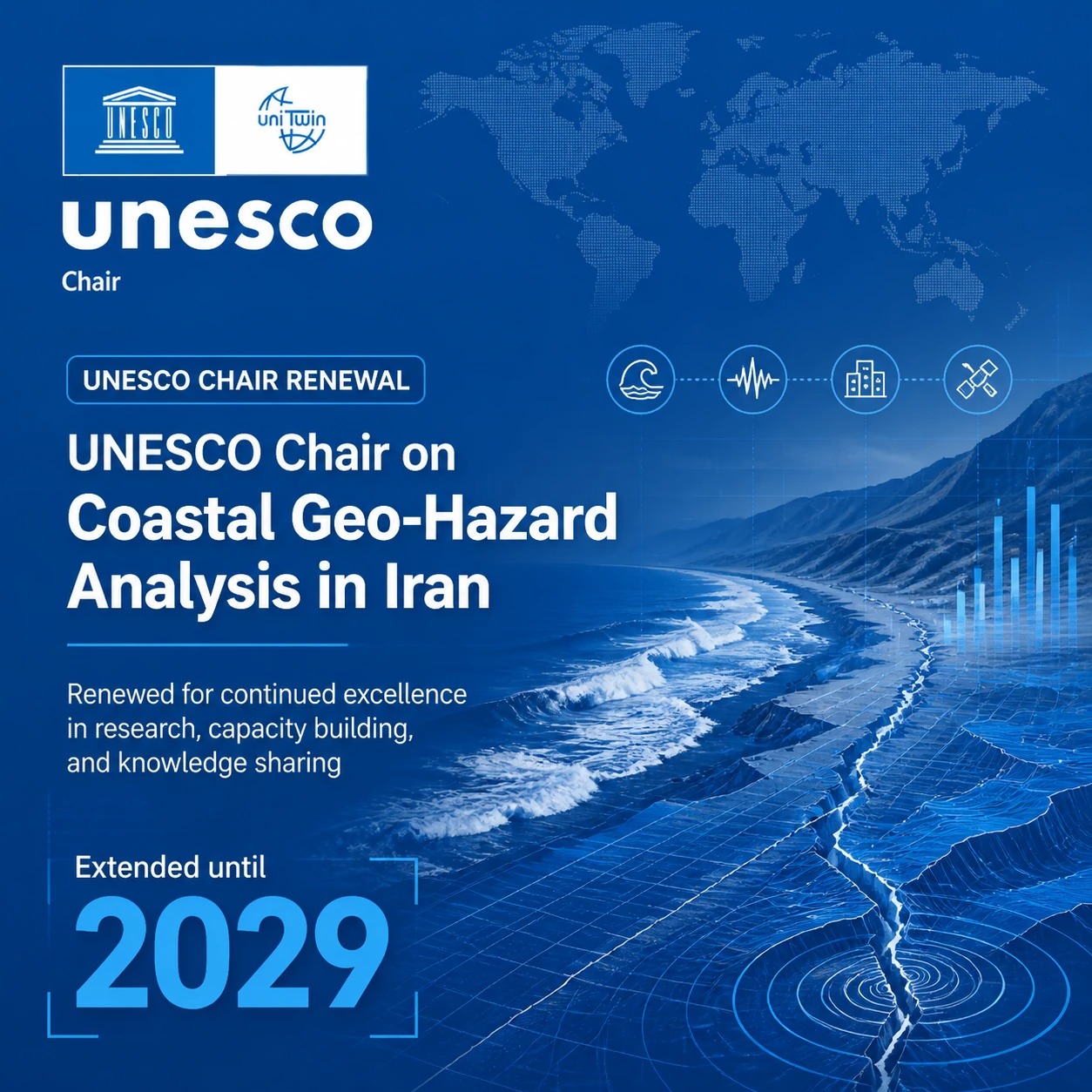
Extension of the UNESCO Chair in Iran on “Analysis of Geological Hazards in Coastal Areas” Until 2029
The United Nations Educational, Scientific and Cultural Organization (UNESCO) has officially renewed the agreement for the UNESCO Chair on “Analysis of Geological Hazards in Coastal Areas,” hosted by the Geological Survey of Iran, extending its mandate until 31 December 2029.
Established in 2021 under the direction of Professor Hamid Nazari, the Chair will continue contributing to the activities of UNESCO’s Intergovernmental Oceanographic Commission (IOC) through research, education, professional capacity building, and community engagement programs.
UNESCO has also emphasized the Chair’s significant role in advancing disaster risk reduction initiatives, environmental protection, and the development of international scientific and academic cooperation.